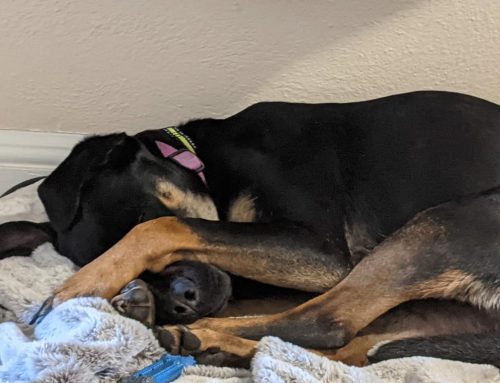
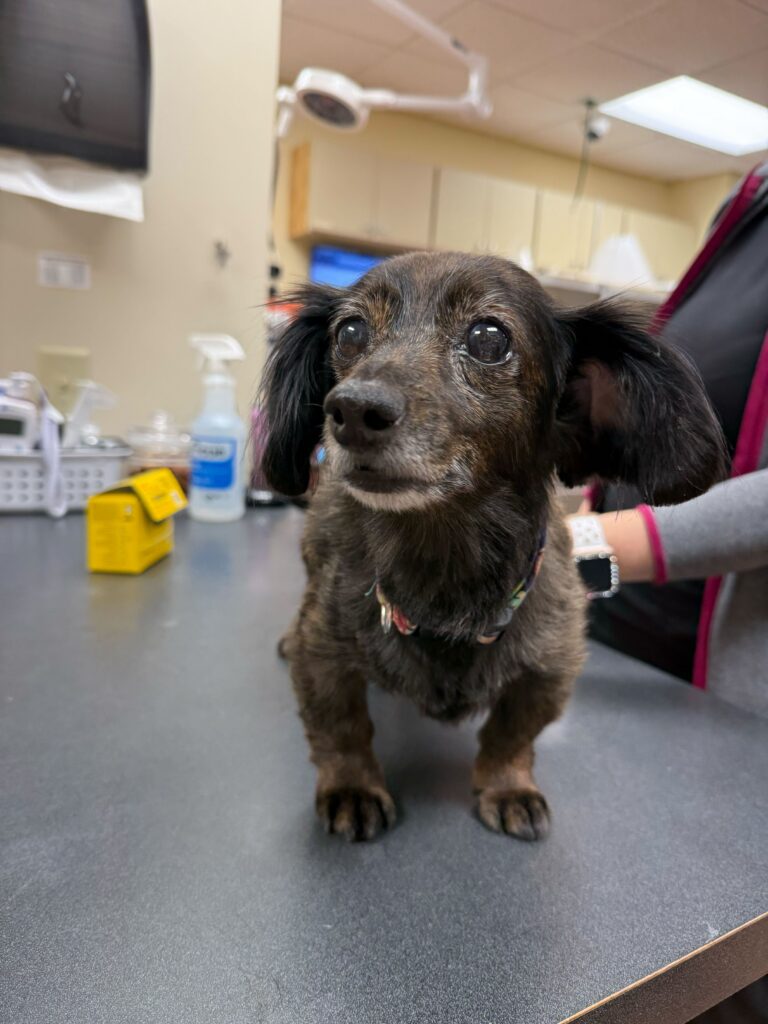
 Bella is a sweet dog who has been living with diabetes for quite a while. Her diagnosis was made before she ever came to see us, and for the most part her family had been managing things well. But recently, Bella just wasn’t acting like herself. She wasn’t eating much, and she was drinking and peeing far more than usual, two signs her family knew not to ignore.
When Bella came in, we checked a urine sample and found ketones. That can sometimes be a warning sign that a diabetic pet’s body is starting to struggle. To get a clearer picture, we used a small handheld blood ketone meter. It showed a mild elevation. It wasn’t anything dramatic, but it was enough to tell us that Bella might be heading toward early diabetic ketoacidosis (DKA), a serious complication if it goes unchecked.
The good news is that we caught it early. Because her family brought her in right away, Bella was able to get the care she needed without being hospitalized. With close monitoring and support, she was able to stay comfortable at home while we kept a close eye on her glucose levels.
Bella’s story is a great reminder that small changes in a diabetic pet’s habits – especially appetite, thirst, or bathroom patterns – are worth paying attention to. Early action can make all the difference, just like it did for her.